Where Poway's water comes from
The City of Poway operates its own water and wastewater service, and most of the water it delivers is imported. The City publishes an Annual Water Quality Report that lists hardness, disinfectant and other measurements for the year. Read it for current figures instead of relying on general claims.
Two details matter for plumbing. Local water is hard, meaning it carries dissolved minerals such as calcium and magnesium. And the City disinfects with chloramine. Neither is a health concern in itself, but both can influence how pipes, fittings and appliances wear over time.
Hard water and older copper
Many homes in Poway neighborhoods such as Green Valley and Rancho Arbolitos were built in the 1970s and 1980s, often with copper supply lines, sometimes routed through the slab. Copper that has carried hard water for decades can develop pinhole leaks, tiny breaches that begin on the inside of the pipe wall. They are more likely in some pipes and conditions than others, so a leak in one home does not mean every home on the street has the problem.
Pinhole leaks often start as slow seeps. A single pinhole may do little harm for months. Several along one run usually mean the pipe is wearing out as a whole.
Hillside pressure
Poway is hilly, and water pressure at the tap depends partly on how much lower your home sits than the reservoir that serves it. Homes at lower elevations can receive higher pressure. Many houses have a pressure reducing valve, or PRV, near the main shutoff to bring that pressure down to a safe level.
A PRV does not last forever. When one fails, full pressure can reach appliance hoses, water heater connections and old pipe. Burst supply lines are a common result. Subdivisions such as High Valley, Old Coach Estates and Bridlewood are often discussed in this context, but the only way to know your own pressure is to measure it with a gauge on an outdoor hose bib.
Warning signs worth checking
- A water bill that rises without a change in how you use water
- Pipes that bang or hum when a fixture closes
- Water that sprays hard from a faucet
- Damp spots on a slab floor, warm patches underfoot or a sound of running water at night
- Blue-green stains or crusty deposits around copper fittings
What to do next
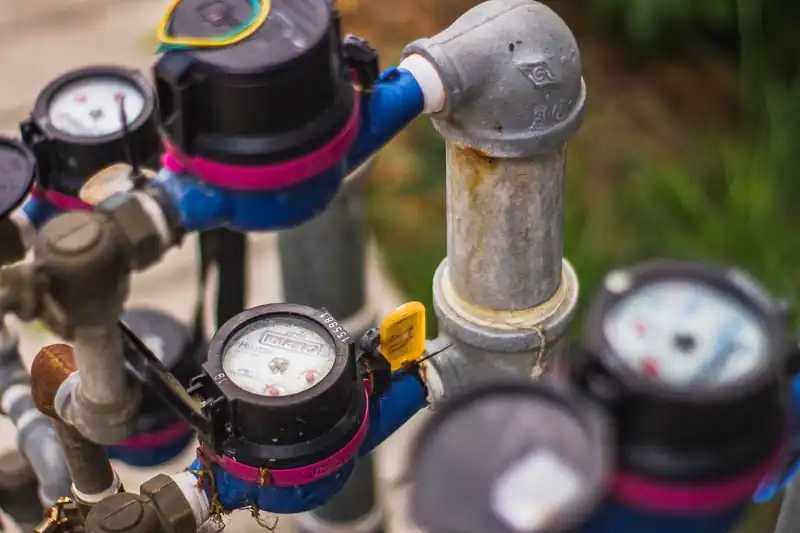
Start with a meter test. If the meter shows water moving, call us. Our slab leak detection pinpoints the leak first, and water leak repair covers permanent fixes, PRV replacement and rerouting. Our partner licensed plumbers do the repair work. You can verify any contractor license at cslb.ca.gov.
Source: City of Poway Annual Water Quality Report. For after-hours water emergencies on the City side of the meter, the City lists 858-668-4449.
Frequently asked questions
Is Poway water hard?
Yes. Local water is hard, and the City's Annual Water Quality Report lists the measured hardness. Hard water leaves mineral scale on fixtures and can contribute to wear inside older pipe.
What is a pressure reducing valve?
A PRV is a valve near your main shutoff that lowers incoming water pressure to a level your plumbing can handle. When it fails, pressure can rise and stress hoses, fittings and pipe.
How much does leak repair cost in Poway?
Pricing depends on the scope of work: the size of the home, the number of lines involved, how easy they are to reach and the methods required. Our partner licensed plumbers set final repair terms after an on-site inspection.
What should I do while I wait for a technician?
If water is actively escaping and the customer shutoff is safely accessible, close it without forcing it. Avoid wet electrical equipment and sagging ceilings. Move belongings only if safe, photograph the damage and avoid using affected fixtures. Ask dispatch about water-heater precautions for your system. Do not open walls or floors. If you smell gas, leave and call 911 and your gas utility from a safe location.